
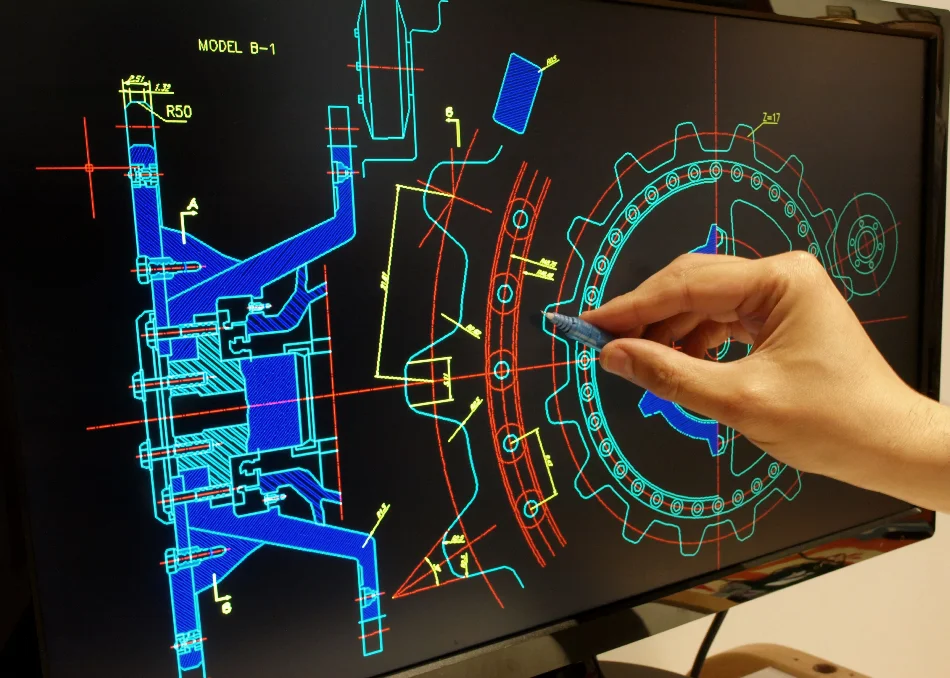
Computer-Aided Design (CAD) has become one of the most transformative technologies in the engineering, architecture, and manufacturing sectors. It refers to the use of computer software to create, modify, analyze, and optimize designs. Traditionally, drafting and designing were carried out manually using paper, rulers, and compasses, which was not only time-consuming but also prone to errors. With CAD, professionals can now design complex structures, mechanical parts, and systems with accuracy, efficiency, and flexibility. This technological advancement has revolutionized the way industries conceptualize and develop products, making CAD a crucial tool in today’s highly competitive environment.
One of the major benefits of CAD is the precision it offers in creating designs. Engineers and architects can produce detailed 2D drawings and intricate 3D models that are far more accurate than traditional manual drafts. CAD software eliminates the limitations of hand-drawn designs and allows for exact measurements, scaling, and visualization. This precision is vital in industries such as automotive, aerospace, and civil engineering, where even the smallest errors can lead to significant setbacks. Moreover, CAD provides an opportunity to test designs in virtual environments, helping professionals identify flaws or areas for improvement before actual production begins.
CAD also enhances productivity by significantly reducing design time. Unlike manual drafting, which could take weeks, CAD enables rapid modifications and iterations of a design. Engineers can easily duplicate elements, adjust dimensions, or alter features without redrawing the entire project. This not only saves time but also allows teams to explore multiple design variations quickly. The ability to reuse templates and digital libraries further streamlines the design process. Consequently, companies can accelerate product development cycles, reduce costs, and bring innovations to market faster, giving them a competitive edge.
Another critical advantage of CAD lies in its collaborative capabilities. Modern CAD platforms allow multiple users to work on the same project simultaneously, regardless of their geographical location. Cloud-based CAD tools have become especially important in global industries where design and production teams are often spread across different regions. These collaborative features improve communication, reduce errors caused by misinterpretation, and ensure all stakeholders are aligned. Additionally, CAD files can be easily integrated with other technologies such as Computer-Aided Manufacturing (CAM) and 3D printing, bridging the gap between design and production seamlessly.
Beyond engineering and manufacturing, CAD is widely used in fields such as architecture, interior design, fashion, and even healthcare. In architecture, CAD enables the creation of highly detailed building layouts, structural designs, and simulations of how structures will perform under different conditions. In healthcare, CAD supports the development of prosthetics and medical devices customized to patient needs. The versatility of CAD demonstrates its growing influence across diverse sectors, making it a truly universal tool for innovation.
Source - https://www.marketresearchfuture.com/reports/computer-aided-design-market-8531
Computer-Aided Design (CAD) is no longer just an optional tool but an essential component of modern industry. Its ability to deliver precision, efficiency, collaboration, and innovation has reshaped the way professionals work across multiple fields. As technology continues to advance, CAD is expected to integrate more deeply with artificial intelligence, automation, and virtual reality, further enhancing its capabilities. The growing importance of CAD highlights its role as a cornerstone in shaping the future of design and development worldwide.
